

Posted on April 1, 2021
Vote for Fight For the Future, International Rescue Committee and Transgender Law Center this April

Every month, CREDO members vote to distribute our monthly donation to three incredible progressive causes – and every vote makes a difference. This April, you can support civil rights, humanitarian aid and transgender equality by voting to fund Fight For the Future, International Rescue Committee and Transgender Law Center.
 Fight For the Future
Fight for the Future is a group of artists, engineers and activists who have been behind the largest online protests in human history, channeling outrage into political power to win victories. Fight works to build a future where technology liberates — not oppresses — us.
Funding from CREDO members will help Fight for the Future protect freedom of expression online, restore net neutrality, ensure affordable Internet access for all, curb Big Tech’s surveillance practices, and end government spying.
 International Rescue Committee
The IRC responds to the world’s worst humanitarian crises, helping to restore health, safety, education, economic well being, and power to people devastated by conflict and disaster. The IRC is at work in over 40 countries and over 20 U.S. cities.
Funding from CREDO members supports the IRC’s mission to provide life-saving care and relief to refugees, displaced people and vulnerable populations fleeing from conflict and disaster.
 Transgender Law Center
TLC is the largest national trans-led organization advocating for a world in which all people are free to define themselves and their futures. Grounded in legal expertise and committed to racial justice, TLC employs community-driven strategies to keep transgender and gender nonconforming people alive, thriving, and fighting for our rights.
Funding from CREDO will help TLC promote our visionary new national Trans Agenda for Liberation; develop movement leaders and build power for change; and create and advance the legal and policy frameworks that respect and support transgender equality.
Your vote this month will determine how we divide our monthly donation among these three progressive groups. Be sure to cast your vote to support one, two or all three by April 30.
CREDO members who use our products and services everyday are the reason we are able to make these donations each month. Learn more about CREDO Mobile and CREDO Energy and join our movement.
Posted on March 31, 2021
How to Block Annoying Robocalls and Spam Calls on Your Phone


We hate robocalls and spam calls, and we know you do too.
Scammers flood our phones about expired warranties, overdue taxes to the IRS or irregular activity on a credit card. They are persistent, annoying and dangerous.
But we’re here to give you a few simple ways to help slow or stop the irritating and aggressive robocalls and spam calls that you might be getting on your phone.
If you’re getting these annoying spam calls to your phone, you’re not alone — and the problem is growing worse every year. In 2020 alone, the average American received more than 28 spams calls per month, a big increase over the year before, despite the pandemic.
There are some simple and free steps you can take to slow the onslaught of spam calls hitting you every day. In addition, a few paid apps can help to significantly try to reduce the robocalls and spam calls that you receive.
Register your phone number with the National Do Not Call list
In addition to some initial common sense steps to protect yourself from scammers, like not answering your phone from blocked numbers or numbers you don’t recognize and never giving out personal information to people you don’t trust, take a few minutes to register your phone number with the National Do Not Call Registry.
The Do Not Call Registry is an FTC initiative to stop unwanted telemarketing calls to landlines and mobile phones along with a mechanism to report bad actors. While this should reduce the number of calls you might receive from legitimate marketing campaigns, it won’t stop disreputable marketers or illegal scammers from dialing your number. You can also legally receive calls from pollsters, political organizations, charities and debt collectors, however we do think it’s a good first step for everyone to take.
Sign up for the Do Not Call Registry here.
Find more tips to protect yourself from phone scammers here.
Silence unknown numbers in iOS
If your Apple device is running iOS 13 or higher, you can silence all incoming calls to your phone that aren’t in your contact list and send them straight to voicemail. This won’t completely stop the calls coming in, but it will prevent your phone from ringing or vibrating from unwanted calls. Before turning this on, make sure important phone numbers are stored in your Contacts if you don’t want to miss an important call (never fear – they can still leave a message!).
To turn on Silence Unknown Callers, go to Settings > Phone, then scroll down, tap Silence Unknown Callers, and turn on the feature.
Block all unknown numbers in Android
If you have an Android device, you may be able to block all calls coming from unknown numbers. This is a little more extreme than silencing unknown callers, but if your phone is ringing off the hook, this could be a good option.
To turn on this feature (the instructions may vary from one Android device to another), Tap the phone icon > Tap the three dots at the top of the screen > Tap “Settings” in the dropdown menu > Tap “Block numbers” > Toggle the button beside “Block unknown callers.”
Block specific numbers on your phone
As robo or spam calls come in, you can block each phone number from calling you again. We’ll be honest, this is a game of whack-a-mole, since scammers use endless numbers — even spoof your number, a neighbor, or your bank’s phone number — to keep calling you, but it’s worth a shot if you want to slow these calls.
To block numbers on iOS, open the phone app, tap Recents, tap the Info button next to the phone number or contact that you want to block. Scroll down, then tap Block this Caller. Do this for every number that you want to block in the future.
To block numbers in Android (again, this will depend on the model of your phone), open the Phone app > Tap recent calls or call history > Tap the number you want to block > Find the command to block or report as spam.
Use a Third-Party Spam Call & Text Blocker
If all else fails — and it might — a third-party app to identify and block annoying robocalls, spam calls and texts is a great option.
These apps enhance the caller ID functions of your phone, employ large blacklists of spam numbers to automatically block calls and texts in real time, along with other call blocking features. Some apps are free with limited bells and whistles, while the paid apps have more robust features and customer service, which also comes with a monthly or yearly user fee.
Some popular spam blocking apps include Hiya: Caller ID & Spam Blocker (Free on iOS & Android), Nomorobo ($1.99 per device, per month + a 14 day free trial), and RoboKiller: Spam Call Blocker ($39.99/yr + 7 day free trial).
Check out 7 of the best robocall blocking apps and tools for avoiding phone spam on Mashable for more in depth reviews to help you find the right spam blocking app for you.
Posted on March 30, 2021
AT&T is Funding Voter Suppression & Republican Insurrection


Once again, AT&T is funding right-wing causes and Republican politicians when they thought no one was watching.
In the last few weeks, journalist Judd Legum reported that the telecom giant quietly donated tens of thousands to Republican lawmakers in Georgia and Florida who are behind new Jim Crow-style voter suppression bills that will make it hard or impossible for Black and brown voters to cast their ballots.
If that isn’t enough, just weeks after AT&T promised to end donations to Republicans who objected to certifying the 2020 presidential election — which enabled the deadly Capitol insurrection — the company broke its pledge and cut a $5,000 check to the PAC of a leading Republican objector.
All of this is on top of AT&T’s long history of supporting the right-wing agenda, reinforcing a pattern of Republican political spending and revealing where their values really lie.
AT&T is funding voter suppression efforts in Georgia and Florida
In the wake of record voter turnout in 2020, especially among communities of color that helped secure Joe Biden’s victory, Republican state lawmakers across the country are aggressively pushing highly restrictive voter suppression laws to keep Black and brown voters from casting their ballots in the next election.
These bills would institute harsh voting restrictions like requiring voter IDs and limiting drop boxes, early voting, mail-in voting, and voting on Sundays (a traditional day for voting in many Black communities). One Georgia bill recently signed into law — below a painting of a slave plantation, no less — would make it a crime to hand out water to people waiting in line to vote.
While AT&T publicly claims they support voting rights, the company has quietly been a top funder of lawmakers in Florida and Georgia who are behind these racist voter suppression efforts.
Earlier this month, Popular Information reported that AT&T donated at least $99,700 since 2018 to a group of Georgia Republican lawmakers who are sponsors of House Bill 315 and Senate Bill 241, two voter suppression bills that would make voting much harder for many Georgians.
In Donald Trump’s new home state of Florida, Senate Bill 90, backed by state Republicans and Gov. Ron DeSantis, is a harsh voter suppression bill that buys into Trump’s lies of voter fraud and would ban ballot drop boxes, limit who could return a legal ballot to a polling place, and place restrictions on mail-in voting. Popular Information also recently reported that, since 2017, AT&T donated at least $45,000 to Ron DeSantis and eight state senators pushing for the bill to become law.
AT&T broke its pledge, continues to fund Republicans who enabled the US Capitol riots
In January 2021, we shared reporting that uncovered AT&T was the largest corporate contributor to Congressional Republicans who announced that they would overturn the will of the voters and object to certifying then-President-elect Joe Biden’s electoral college victory, having donated a whopping $2,053,000 to those 130 lawmakers.
These members of Congress fueled Donald Trump’s Big Lie that the 2020 election was “stolen” due widespread voter fraud. None of this was true, yet thousands of insurrectionists took their cue from Trump and these conspiracy-toting lawmakers and stormed the U.S. Capitol in a last-ditch, deadly attempt to install Trump for a second term.
After news reports and widespread public condemnation — including here at CREDO — AT&T issued a statement claiming that it “decided to suspend contributions to members of Congress who voted to object to the certification of Electoral College votes this week.”
Barely a month went by before Popular Information revealed that AT&T’s political action committee turned on the Republican donations spigot once again and on Feb. 22 donated $5,000 to the House Conservatives Fund, the Leadership PAC of Congressman Mike Johnson, a Republican from Louisiana who not only voted against certifying the Electoral College, but also announced on Twitter just hours before the deadly insurrection that it was his “honor to help lead that fight in the Congress today.”
You’d expect this frightening irony would make any self-respecting corporation think twice about donating to a politician like this. Apparently not for AT&T.
And it won’t surprise you that this isn’t the first time AT&T has acted in its self-interest or the interests of Republican lawmakers. Here are 11 more reasons why it’s time to drop AT&T.
At CREDO, our customers never have to worry that we would fund Republican lawmakers or right-wing causes. Just the opposite. We donate millions to our partners and allies who are fighting harsh voter suppression efforts, like the Brennan Center for Justice, Black Votes Matter and Fair Fight Action, and organizations standing up for civil rights, including the ACLU, NAACP and Color Of Change.
Posted on March 26, 2021
Ultraviolet is fighting for a more just and equitable world for Black and brown women

As we mark one year of the COVID-19 pandemic, in the middle of Women’s History Month, we must acknowledge that Black and brown women have been on the front lines of the COVID-19 response, bearing the greatest burden of this pandemic. We must also acknowledge that women are still being left behind and left out.
As Brittany Packnett Cunningham says, “A global crisis does not erase inequality. It expands it. As we live through this pandemic, we have a responsibility to expose and solve for injustice.”
Mothers of color have borne the brunt of the COVID-19 pandemic, with staggeringly low wages compounding the problem. While the recently signed American Rescue Plan includes hugely important victories and much needed help, from important funding for child care, to cutting child poverty in half, it is just a rescue plan – we still need to recover and build back in a way that centers the millions of women who are told that they are essential, but paid poverty wages.
As we work towards recovery, we must build an economy that works for us all. That’s why UltraViolet is working to pass a $15 minimum wage that would be transformative for women, lifting pay for 32 million workers, nearly a quarter of whom are Black and Latina mothers. As a result, they will be able to afford safer housing, nutritious food, medicine, and other essentials. And we need more permanent changes, that’s why we’re fighting for permanent increases to paid family leave, funding for child care, and to stop the attacks on our reproductive care. We must also fight white supremacy and misogyny and all the ways that together they have fueled hatred and violence. The far right, empowered by Trump, has been using social media platforms like Facebook, Twitter, and Youtube to spread sexist and racist disinformation — or put simply, lies — about the Coronavirus and directly threatening Asian-American women.
Over the past year, we have seen a surge of violence against members of the Asian American community, and just last week, a misogynist white supremacist killed eight people, six of them Asian women. The amplification of racist lies targeting the Asian American community via social media and Donald Trump’s bully pulpit, combined with misogynist and exploitative views of women as well as the easy access to firearms in the U.S., directly contributed to this act of violence.
We need more support to continue our work to:
- Advocate for an economy that truly centers Black and Indigenous women, as well as women of color
- Fight the attacks on our reproductive freedom;
- Fight the online misogyny that fueled the attacks on the Capitol on January 6;
- Hold the media accountable for its treatment of women and people of color;
- Hold corporations that fund anti-women, anti-justice politicians accountable
- Stand up to Republican-led attacks on women and vulnerable communities–especially women of color, LGBTQ communities, and Indigenous women;
- And much more.
Posted on March 24, 2021
Here’s how to securely erase your phone before selling or trading in


If you’re planning to sell, trade in or give away your current phone, there are a number of steps you should take to prepare your phone in order to protect your personal information and secure your data and accounts.
That means unpairing, backing up, logging out, and most importantly, securely erasing all of your data before you hand over your device.
So if you’re thinking about upgrading your current phone (and we have some amazing deals on our website right now!), here’s what you should do with your phone before selling, trading it in or giving it away.
Preparing your Apple device for trade in or sale
- Unpair your Apple Watch, if you have one. Here are the instructions from Apple:
- Keep your Apple Watch and iPhone close together as you unpair them.
- Open the Watch app on your iPhone.
- Go to the My Watch tab and tap All Watches.
- Tap the info button next to the watch that you want to unpair.
- Tap Unpair Apple Watch, then tap again to confirm.
- You may need to enter your Apple ID and password to turn off Activation Lock.
- Backup your data. If you want to save the data on your phone, like photos, contacts, and music, and you’re not sure you’ve been backing it up, check out our recent blog post on how to backup your device’s data to iCloud or your computer.
- Manually sign out of iCloud & turn off Find My [device]. While erasing your phone should log your device out of Apple’s services and turn off Find My [device], it’s good to take this step to ensure it works.
- To sign out of iCloud, tap Settings > [your name]. Scroll down and tap Sign Out. Enter your Apple ID password and tap Turn Off. (for iOS 10.3 and later)
- To turn off Find My:
- Open Settings.
- Tap [your name] > Find My.
- Tap Find My iPhone, then tap to turn it off.
- Enter your Apple ID password.
- Tap Turn Off.
- Erase your phone or tablet. Now that your data is backed up and you’ve logged out of your Apple accounts, you’re ready to securely wipe your phone clean.
- Go to Settings and tap General > Reset > Erase All Content and Settings.
- If prompted, enter your device’s passcode, then tap erase. The whole process may take a few minutes.
- Remove your SIM card. To be extra safe, it’s a good idea to remove your SIM card, which may contain your phone number, security information and billing info. To remove, locate the SIM tray (usually on the right side of your device) and insert a paperclip into the hole to pop out the tray. Take out the SIM card and replace the tray.
Preparing your Android device for trade in or sale
- Backup settings & data to Google. Before parting ways with your Android device, you’ll want to save all your settings, data, photos, music and everything else to your Google Drive. Check out our blog post on how to back up your Android here.
- Encrypt your data. Now that your data is backed up, you’ll want to properly wipe your device. But before you can do that securely, you need to encrypt your data first. Here’s how:
- Plug your phone into its power adapter, since this step may take a little while.
- For most phones, go to Settings > Security & privacy > Encrypt.
- On some Samsung devices, try Settings > Lock screen and security > Protect encrypted data.
- Disable Factory Reset Protection. This is a feature on newer phones that prevents someone from factory resetting your phone if it’s been lost or stolen, so you’ll need to disable this prior to parting with it. Depending on the make and model of your device, this may be part of the factory reset process (if you’re logged in with the owner account). Otherwise, you will need to manually disable it in Settings.
For example, on many Samsung devices, go to the phone’s home screen, tap Apps > Settings > Accounts and choose the account you wish to remove. Select More or three dots in the top right corner of the screen > Remove Account. If this doesn’t work, refer to your manufacturer’s website for more information.
- Erase your data. Now it’s time to wipe the phone securely before shipping it off for an upgrade or to a friend or family member. Make sure your phone remains plugged in, and head to Settings > Backup & reset > Factory data reset and tap Reset phone.
- Remove your SIM card. To be extra safe, it’s a good idea to remove your SIM card, which may contain your phone number, security information and billing info. To remove, locate the SIM tray (usually on the right side of your device) and insert a paperclip into the hole to pop out the tray. Take out the SIM card and replace the tray.
Posted on March 22, 2021
How CREDO funding to Planned Parenthood is helping protect access to care


For more than 35 years, we’ve been honored to fund Planned Parenthood’s important work to protect access to health care and reproductive rights. In fact, since 1985, CREDO customers like you have generously helped us donate more than $3.6 million to Planned Parenthood and its affiliates, making CREDO among its top corporate donors.
Just by using our products and services every day, you and other CREDO customers power our donations to strengthen women’s rights, at no extra cost.
Today, we’d like to share a story that highlights how critical funding like ours to Planned Parenthood is helping Latinx organizers fight for public policies that represent their communities and work to protect access to health care.
Organizer Norma Jimenez got involved with Planned Parenthood in Phoenix, AZ in 2018 to help Spanish-speaking communities enroll in health care plans through the Affordable Care Act. After the enrollment period ended, she continued working with Planned Parenthood to provide educational forums for local Spanish speakers. And, after personally experiencing a lack of quality sex education in school and at home, she advocated for better sex education policies that were adopted by local school districts.
Norma is a Planned Parenthood organizer because: “Planned Parenthood is the country’s largest sex education provider as well as the go-to provider for reproductive health care for people. Planned Parenthood was there for me when I needed my first annual exam. They were there when I needed to learn about my birth control options and most importantly, Planned Parenthood helped me find my voice, and my identity. I learned to love my body unconditionally. I want all young people to know they are not alone, and it’s okay to feel confused and scared. Planned Parenthood is here for you.”
Stories like these are possible because of the generosity of supporters across the country, including funding from CREDO Mobile customers who use our products and services every day, at no extra cost to them.
While Planned Parenthood isn’t on our donations ballot this month, you have the opportunity to vote to help us fund three other, important nonprofit organizations who need our help: Amazon Watch, Center for Disaster Philanthropy, and UltraViolet.
If you haven’t yet voted this month, please take a minute and visit CREDODonations.com to vote for one, two or all three of these amazing groups today.
Posted on March 17, 2021
Here’s why you need to start using a password manager — and how you can get started


We’re all guilty of it: You’re signing up for a new account online, and it’s time to create a new password, so you reuse the same one you always use, and it’s probably your birthday or dog’s name, maybe with some extra numbers at the end.
And we get it, it’s tough to remember all those passwords for our email, social media, bank accounts, shopping sites and other online services. But if you’re not using unique and complex passwords on every site, you’re making it easy for hackers or criminals to compromise your sensitive information.
A password manager can help. It keeps all of your accounts secure by creating, encrypting and storing your passwords so you don’t need to write them on a sticky note next to your computer anymore.
Here’s a quick guide on how to get started using a password manager to help secure your online accounts.
What is a password manager?
If you’re reusing your passwords, you’re not alone. According to a recent study, more than 50 percent of all people reuse or modify similar passwords across their internet accounts — and this is a big problem, especially if you use similar passwords on very sensitive accounts, like banking, investments, and your primary email account.
With the alarming rise of data breaches and leaks — and the buying and selling of user data on the dark web — reusing the same password could put your information at risk. Even if you use the same, long, complex password across multiple sites, once hackers have that password, they could access other accounts that use the same or similar password. That’s why it’s so important to utilize a password manager to create strong and unique passwords for each site you use.
Here’s where a password manager can help. It can create long, complex passwords that you’ll never have to remember, then encrypt and store them in a digital vault that only you (or a loved one) can access. When you visit the login page for a site, the password manager automatically fills in your credentials from your vault. Additionally, password managers can also help protect you from phishing scams, because the password manager typically will only fill in your credentials on the correct site, not a fraudulent one.
How to get started with a password manager
This all may sound a bit confusing, but it’s pretty simple. Here’s how you can get started:
-
- Choose a password manager. You may already be using a browser or operating system to store your passwords (like in Chrome, Safari or iOS), but we like password managers that are cross-platform and work across browsers. So, for example, if you save your password on Firefox on your PC, a cross-platform password manager will allow you to still seamlessly access that password on your iPhone or Android apps.Some popular password managers are LastPass, 1Password, Keeper, BitWarden and Dashlane. They all charge a monthly fee for premium accounts, but we think the protection they provide is worth it.
- Download the password manager, install its browser extension on your computer, and install the accompanying app to your phone. The process should be pretty straightforward and the password manager should guide you easily through each installation step.
- Choose a master password or passphrase that allows you to access your password manager and start storing your passwords. This will typically be one of the last passwords you’ll ever need to remember and enter manually. LastPass has a good blog post on how to choose a strong and easy-to-remember master passphrase. We recommend you also write this master password down, and store it securely in a locked desk or fireproof safe, in case you forget it.
- Audit your current passwords. As you begin logging into sites or apps, your password manager will start saving your account information in your vault. After you’ve logged into most of your important sites, like your email, banks and other sites, your password manager should allow you to run a security audit of your current passwords to let you know which ones are being reused and suggestions for which passwords to change. You may also have alerts for email addresses and passwords that have been found on the dark web, which would also need to be changed.
Posted on March 16, 2021
Survey results: What apps are helping you get through the pandemic?


For more than a year now, CREDO members have found new and exciting ways to be more resilient and innovative in their day-to-day lives — with new technology, tools and apps to make things more manageable, organized and connected.
We recently asked our members which apps and other tools they’ve relied upon to make life a little easier during the pandemic. From video conferencing to mindfulness to books and social media, CREDO members found a lot of ways to stay connected, entertained and productive on their phones and tablets during these tough times.
After nearly a thousand responses, here are the results and suggestions for new apps to try out. Enjoy!
During the pandemic, have you spent more time at home than you did before?
We just passed the one-year mark announcing the official start of the pandemic, and during the time since, many of us transitioned to work-from-home or distance learning, traveled less and have sadly seen our family less, too (which we hope is ending soon!). We asked our members if they’ve been home more during the past year, and the answer was an overwhelming “Yes” from nearly 95% of our members who responded.
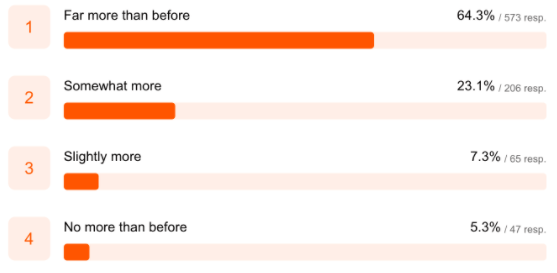
Have you adopted any new tools or apps that have made your life easier while you’ve been at home?
With all this time spent at home, a majority of CREDO members sought out new apps and tools to make life a little easier.

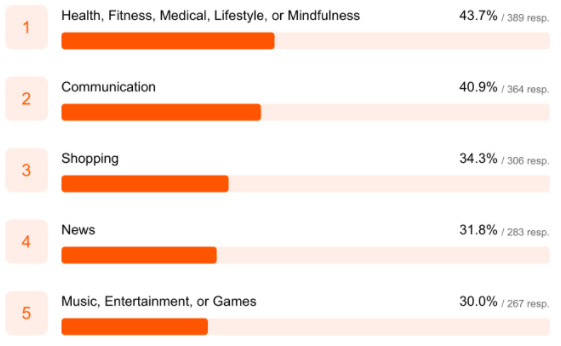
In which areas, if any, have you adopted new tools or apps that have made your life easier?
There are a lot of apps, programs and tools on the market today, but one category of app stood above the rest: health and wellness, followed closely by communication and shopping.
For many of us here at CREDO, health and mindfulness apps have been important additions to our phone’s home screen. Personally, I use Headspace every day, and it’s been very helpful to reduce stress and increase happiness.
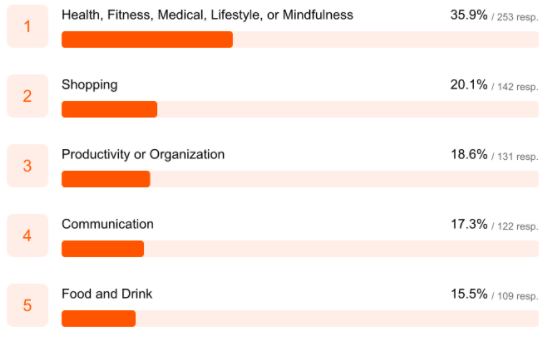
In which areas, if any, do you face regular inconveniences and wish you had better solutions?
At the same time, our members would still like better solutions to help with health, fitness and mindfulness, as well as shopping, productivity and communication.
Looking for a new app? Here are some member suggestions.
We also asked specifically which apps you are using regularly and which ones you’d recommend to a friend.
Not surprisingly, Zoom came out on top as the most suggested app among all of our members.
Also not a surprise, the most popular social media app recommended by our members is Facebook. If you haven’t liked CREDO Mobile on Facebook yet, now’s your chance!
A lot of CREDO members use Kindle to read e-books, but many also use Libby, an app that lets you borrow and read e-books from your local public library for free. You can download Libby on the App Store or Google Play.
Lastly, the most popular health and wellness app suggested by our members was Calm, a popular meditation and sleep app. One year ago, just as the pandemic was about to change our lives, we suggested 5 apps to help you manage stress and anxiety, many of which are still helpful today, especially as we look forward to life hopefully returning to normal soon.
Posted on March 8, 2021
COVID-19 Threatens the Future of the Amazon and Its Peoples

“The second wave of COVID-19 is advancing quickly across the Amazon. We are losing elders, our youth and children. We are losing part of our history and a part of our future. We need to protect our wisdom holders and our future!” – Francinara Souza, Baré, Coordinator of COIAB
The COVID-19 emergency in the Amazon is escalating dramatically. A new strain of the virus has overwhelmed and debilitated the public health system in Manaus, the capital of the state of Amazonas in Brazil, and it is spreading quickly across the Amazon, threatening Indigenous and forest peoples protecting the rainforest and climate for our collective future.
As of February 22, 2021 there have been over 2 million reported cases and more than 52,000 people have died from COVID-19 across the Amazon Basin, primarily in Brazil. According to the Coordination of the Indigenous Organizations of the Brazilian Amazon (COIAB), 71% of all COVID-19 infections in Brazil are in the Amazon.
Indigenous Amazonian leaders have expressed outrage at government negligence and discrimination against Indigenous peoples as the virus continues to spread. In a declaration on January 19, COICA (Coordinating Body of Indigenous Organizations of the Amazon Basin) urged governments to ensure equal access to medical care and vaccines for Indigenous peoples with free, prior, and informed consent. While vaccine plans are underway in Amazonian countries, they do not prioritize Indigenous peoples.

Due to the inaction and discrimination by Amazonian governments, Indigenous peoples have called upon international allies to show solidarity at this critical moment to protect Indigenous rights and lives. They have called on allies – including Amazon Watch – to unite and work together to raise awareness and solidarity funding to ensure medicine, oxygen tanks, logistics, and communication channels are available to serve the most vulnerable populations.
Amazon Watch is responding to the Indigenous health emergency in several ways and has been closely coordinating with APIB (Association of Indigenous Peoples of Brazil) and COIAB. Amazon Watch is contributing to this call for solidarity and disbursing funds via its Amazon Defenders Fund, in close coordination with Indigenous peoples. So far in 2021, Amazon Watch has committed over $200,000 to the COVID-19 health emergency and we are committed to mobilizing and deploying an additional $500,000 in the coming months.
Additionally, as a founding member of the Amazon Emergency Fund, an alliance of Indigenous, NGO, and donor allies responding to the COVID-19 emergency, Amazon Watch is working closely with allies to amplify the calls of Indigenous peoples and raise crucial funds. At least $5 million is urgently needed to cover the immediate needs across the Amazon, including oxygen, rapid-response and traditional health care, food and medical kits, prevention (PPE and vaccines), transportation, logistics, and communications. Amazon Watch is also prioritizing food and economic sovereignty projects led by women. Amazon Watch has committed $125,000 directly for the Amazon Emergency Fund.

Amazon Watch is also coordinating closely with NGO allies including Expedicionarios de Saude, Greenpeace Brasil, Avaaz, and Rainforest Action Network to provide logistical and communications support. For example, as the requests for oxygen increased over the last months, Amazon Watch purchased 100 oxygen concentrators, as well as food and medical kits for Indigenous towns and villages outside of Manaus, including São Jose da Cachoeira. The logistics of getting oxygen concentrators to remote villages are challenging. Funds and swift coordination are required, as Amazon Watch did in solidarity with the Kayapo and Munduruku peoples last spring. Support for Indigenous health centers and traditional medicine is critical for the prevention of the virus and so no one needs to travel outside of villages for healthcare.
José Gregorio Díaz Mirabal, of the Wakuenai Kurripaco people in Venezuela and General Coordinator of COICA, said at a virtual press conference in January “The governments of the region have failed all the inhabitants of the Amazon, both the Indigenous peoples and the rest of us who live in the [Amazon] Basin.”
The Brazilian government is intentionally negligent, and its lack of action has been decried as a deliberate strategy to spread the virus, according to a study by Conectas Direitos Human and the Center for Research and Studies of Health Law of the School of Public Health of the University of São Paulo. Last year, in Brazil alone more than 30,000 cases were registered in 140 Indigenous nations, more than 730 suspected cases, and almost 750 deaths in 107 Indigenous nations in the Amazon, according to official data and that collected by Indigenous grassroots organizations.
Combined with the intentional destruction of Indigenous territories by deforestation, industrial development, and arson, the spread of COVID-19 is more than a public health emergency: it is ethnocide. To hold Brazilian President Jair Bolsonaro accountable, in January Indigenous chiefs Raoni Metukire and Almir Surui filed charges of crimes against humanity against Bolsonaro at the International Criminal Court.
While Amazon Watch’s efforts are primarily focused on responding to the epicenter of the health crisis in Brazil right now, the new strain of the virus is spreading across the Amazon Basin. It has already reached the Loreto province in Peru and the Napo province in Ecuador.
“This pandemic is killing our brothers and sisters – our leaders – throughout the Amazon and if they don’t help us defend it, we are going to disappear.” concluded Tomas Candia Yusupi, from the Chiquitano people, president of Confederation of Indigenous Peoples of Bolivia.
While Amazon Watch is responding and mobilizing resources for immediate action, much more support is urgently needed to respond to and prevent further spread from the new COVID-19 strain. The world must rise and respond to this crisis if we are to prevent more deaths. We cannot afford to lose one more Indigenous elder or child. It has been over a year since the start of the pandemic and every day the world’s leaders fail to halt the crisis in Indigenous communities brings us closer to losing the Amazon, and with it our collective future.
Thank you again for your solidarity and generosity!
Posted on March 8, 2021
Center for Disaster Philanthropy COVID-19 Response Fund: A Year in Review and a Look Forward

The global COVID-19 pandemic has affected us all, although not equally. As the United States mourns the deaths of more than 500,000 of its population due to the COVID-19 virus, we solemnly consider the past year of tragedy, loss and survival, while also looking forward with hope and a sense of community.
We saw many of our friends, neighbors, families and communities come together for each other. At Center for Disaster Philanthropy, we saw unparalleled generosity from our donors and vital life-saving work from our grantee partners. And yet, as the pandemic continues and the impact on lives and livelihood mount, there is much work to be done.
Early response to COVID-19
The CDP COVID-19 Response Fund has become the largest pooled fund CDP has ever managed at nearly $42 million. As a result of gifts from more than 8,000 donors, we have granted $21.8 million to 137 organizations in the U.S. and abroad through January 2021.
Since its founding, CDP has prioritized mid- to long-term recovery following disasters. Yet, we knew that providing organizations with the resources to educate, inform, provide for basic needs and prevent the spread of COVID-19 was critical in mitigating long-term recovery from the pandemic. So we made our first grants just as we began to see the pandemic’s effects on the world.
Now, our grantmaking moves to support recovery from the pandemic. But what does “global recovery” look like? What will be our focus as vaccines are approved and distributed?

Evolving impact of COVID-19 on communities worldwide
The economic impact of social distancing, social isolation and stay-at-home orders has far-reaching implications for working people, especially those with already limited resources and those who rely on a gig economy.
Job losses, the closing of businesses and limited access to basic needs and other resources continue to be critical challenges, even as communities reopen. Some are being forced to shut down again as outbreaks and virus mutations continue.
Refugee camps, homeless camps or shelters, informal urban settlements or any place with high occupancy in enclosed areas where social isolation protocols are near-impossible continue to experience devastating effects and are at greater risk for viral transmission.
Vaccines are now available, but getting those vaccines to enough of the population to control the virus will take time, particularly in locations most difficult to reach.
“This past year has been one of uncertainty and heartbreak. But we must be steadfast in our commitment to helping one another –sometimes simply being there for one another – even if being “there” is a bit different…We appreciate CREDO, its subscribers and the many donors who have contributed to the CDP COVID-19 Response Fund for putting their trust in us to do what we can to support a global recovery.”
Our approach
The CDP team examines who has the greatest needs, what the needs are and where needs are greatest.
In the U.S., it is clear that immigrants, refugees, communities of color and low-income communities are the most affected by the pandemic – as is the case in all disasters. We seek to fund organizations that advocate for these populations and those providing direct support for them.
We are committed to mobilizing our resources to create real, transformative change by listening, learning, understanding and investing in organizations led by Black, Indigenous and other leaders of color.

Supporting COVID-19 Recovery in 2021
The CDP COVID-19 Response Fund is now focusing on addressing the following issue areas worldwide:
- Mental health: Psycho-social support is a major priority as the pandemic, alongside multiple disasters affecting our communities, has caused layered trauma.
- Physical health: We will support communications about the virus and vaccines to combat disinformation and misinformation and equitable vaccine distribution so that even those populations most challenging to reach will have access.
- Economic impact: We will provide for basic needs as we continue to see economic uncertainty, food insecurity, homelessness and job loss.
- Health care systems: We will support health care systems to enable them to provide prevention and treatment for the virus.
- Most affected populations: We will support efforts that mobilize and amplify the voices of communities and populations most devastated by the pandemic to improve their access to resources.
Appreciation and hope
This past year has been one of uncertainty and heartbreak. But we must be steadfast in our commitment to helping one another – sometimes simply being there for one another – even if being “there” is a bit different.
We’ve seen this commitment in the creative ways teachers have managed remote learning, and friends and families have celebrated events together but apart.
We’ve seen this in the financial commitment from donors like Dolly Parton, the Bill & Melinda Gates Foundation and others who helped ensure vaccines were developed quickly and will be shipped and shared universally.
We appreciate CREDO, its subscribers and the many donors who have contributed to the CDP COVID-19 Response Fund for putting their trust in us to do what we can to support a global recovery.
And, as we wait our turn for a vaccine, we will continue to support one another by remaining committed TOGETHER – masked up and from a distance of at least six feet apart.

